Buy balkangrill.eu ?
We are moving the project
balkangrill.eu .
Are you interested in purchasing the domain
balkangrill.eu ?
domain@kv-gmbh.de · 0541-91531010
Buy balkangrill.eu ?
What is the braking deceleration?
Braking deceleration refers to the rate at which a vehicle slows down when the brakes are applied. It is measured in meters per second squared (m/s^2) and represents the negative acceleration experienced by the vehicle as it comes to a stop. The braking deceleration depends on factors such as the vehicle's mass, the friction between the tires and the road, and the force applied to the brakes. A higher braking deceleration means the vehicle will come to a stop more quickly. **
How do I calculate the deceleration?
To calculate deceleration, you need to determine the change in velocity and the time it takes for that change to occur. Deceleration is calculated by dividing the change in velocity by the time taken for the change to happen. The formula for deceleration is: deceleration = (final velocity - initial velocity) / time. Make sure to use consistent units for velocity and time in your calculation. **


Similar search terms for Deceleration
Top-Angebote
Products related to Deceleration:
-
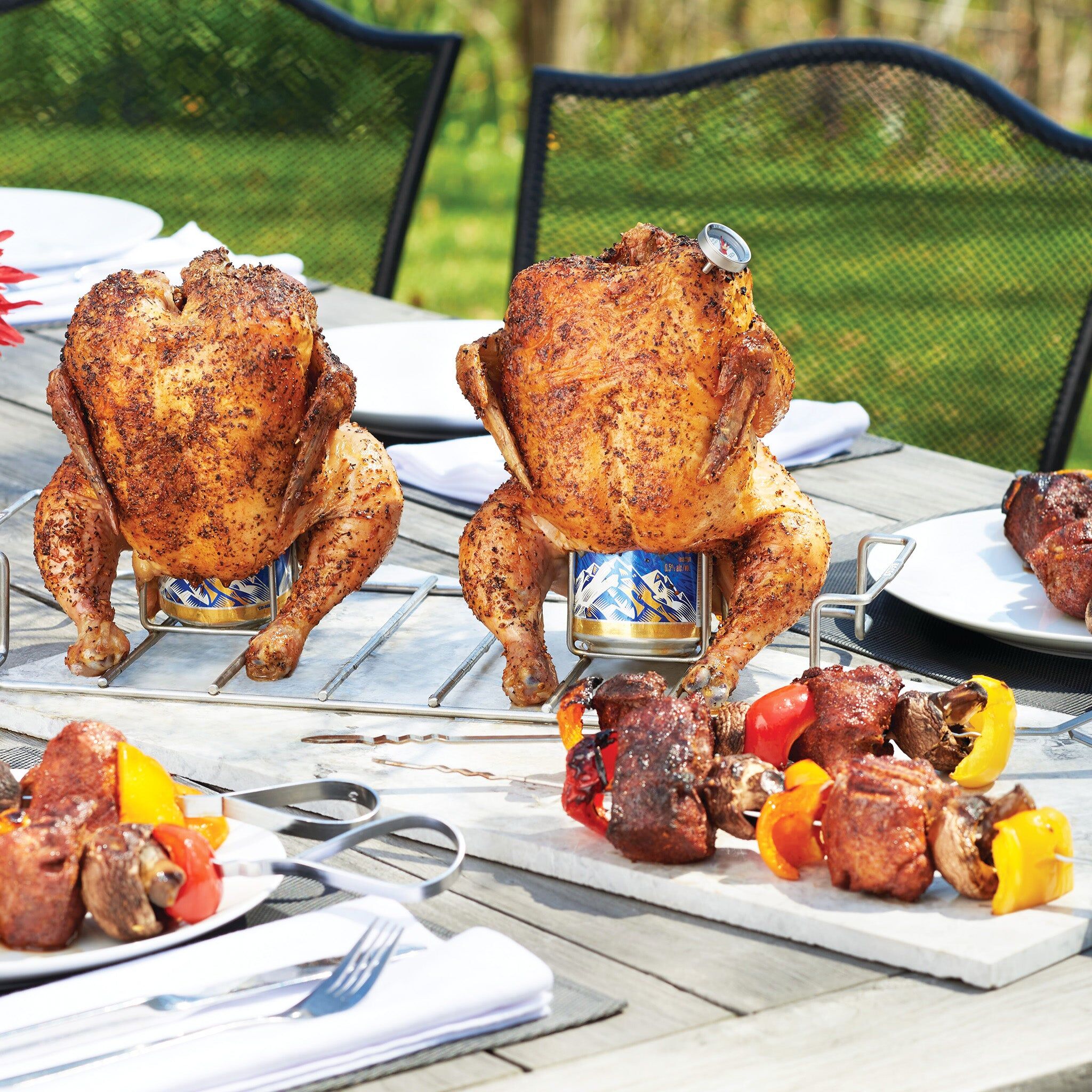
Napoleon Multi Functional Skewers (8 Pack)Create perfect portions with Napoleon's Eight Stainless Steel Multifunctional Skewers. These reusable skewers are made with dishwasher safe stainless steel to provide years of delicious feasts. Custom made meals are easy, slide your favorite meats and veggies onto these skewers. Cook over direct heat for perfect sear marks, or use indirect grilling for a more slow roasted and tender service. Never worry about your food sliding off and falling into the grill. The ridged ends keep whatever you skewered secure, for perfect grilling. You'll never run out of ideas for an easy meal with Napoleon's Eight Stainless Steel Multifunctional Skewers.35,00 £*Shipping: 4,99 £Secure redirect to the provider
-
The Handy Homestead Natural Bamboo Cocktail Picks & Knot Skewers Garnish Sticks For Drinks, Fruit, Charcuterie Natural Bamboo Cocktail Picks & Knot Skewers Garnish Sticks For Drinks, Fruit, CharcuterieTransform every gathering into a stylish, memorable experience with these 100pcs highquality bamboo cocktail picks your guests will notice. Crafted from smooth, durable natural bamboo, these picks make appetizers and drinks look beautifully...34,97 $*Shipping: 0,00 $Secure redirect to the provider
-
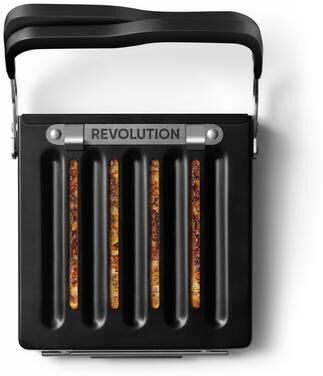
Revolution Toastie Press – Toaster Sandwich Maker for Grilled Cheese, Paninis, Quesadillas & MeltsThe Revolution Toastie Press transforms your toaster into a quick and easy sandwich maker for perfectly toasted grilled cheese, paninis, quesadillas, melts, and more.79,95 $*Shipping: 0,00 $Secure redirect to the provider


-
How do you calculate the braking deceleration?
To calculate the braking deceleration, you need to know the initial velocity of the object, the final velocity (usually 0 if the object comes to a stop), and the time it takes for the object to come to a stop. The formula to calculate deceleration is: deceleration = (final velocity - initial velocity) / time. By plugging in the values for final velocity, initial velocity, and time into this formula, you can calculate the braking deceleration of the object. **
-
How does uniform deceleration work in physics?
Uniform deceleration in physics refers to a constant decrease in velocity over time. This means that the object is slowing down at a consistent rate. The rate of deceleration is measured in terms of acceleration, with a negative sign to indicate that it is in the opposite direction of the initial velocity. This can be represented by the equation a = (vf - vi) / t, where a is the acceleration, vf is the final velocity, vi is the initial velocity, and t is the time taken. Uniform deceleration is important in understanding the motion of objects and can be used to calculate stopping distances and braking forces in real-world scenarios. **
-
Friction on an inclined plane causes deceleration.
Friction on an inclined plane causes deceleration because it acts in the opposite direction of the object's motion. As the object moves up or down the incline, the friction force opposes its movement, reducing its speed. This deceleration is due to the friction force converting the object's kinetic energy into heat. The steeper the incline or the greater the coefficient of friction, the stronger the deceleration will be. **
-
What is the deceleration of the brakes 2?
The deceleration of brakes 2 is 5 m/s^2. This means that the brakes are slowing down the car at a rate of 5 meters per second squared. A higher deceleration value indicates a stronger braking force, which can help the car come to a stop more quickly. It is important for drivers to be aware of the deceleration of their brakes to ensure safe and efficient stopping. **

What is the formula for deceleration in physics?
The formula for deceleration in physics is given by the equation: a = (v - u) / t, where a is the deceleration, v is the final velocity, u is the initial velocity, and t is the time taken. This formula calculates the rate at which an object slows down, or decelerates, over a certain period of time. Deceleration is a negative acceleration, so the value obtained from the formula will be negative, indicating a decrease in velocity. **
How do you calculate the braking deceleration 2?
To calculate the braking deceleration 2, you can use the formula: a = (v_f - v_i) / t, where a is the deceleration, v_f is the final velocity, v_i is the initial velocity, and t is the time taken to decelerate. First, determine the initial and final velocities of the object. Then, measure the time it takes for the object to come to a complete stop. Finally, plug these values into the formula to calculate the braking deceleration 2. **
Top-Angebote
Products related to Deceleration:
-
Royal Gourmet TS1601 13In Stainless Steel Reusable Kebab Skewers (Set of 12) for Grilling, with Storage Pouch, SilverStill fret about those splintery bamboo sticks messily scattered around BBQ parties, let’s replace them with our mess-free Royal Gourmet TS1601 13-Inch BBQ Flat Kebab Skewers.20,29 $*Shipping: 0,00 $Secure redirect to the provider
-
El Yucateco Habanero & Grilled PineappleThis sauce offers a harmonious fusion of sweet, smoky, and spicy flavours, creating a distinctive taste profile that adds a tropical flair to your dishes. It's incredibly versatile, enhancing a wide range of foods. Also can be used for citrus desserts or cocktails. The unique combination of roasted pineapple and habanero achieves a delightful balance between sweetness and saltiness for the best taste experience.3,85 £*Shipping: 3,90 £Secure redirect to the provider
-
Napoleon Multi Functional Skewers (8 Pack)Create perfect portions with Napoleon's Eight Stainless Steel Multifunctional Skewers. These reusable skewers are made with dishwasher safe stainless steel to provide years of delicious feasts. Custom made meals are easy, slide your favorite meats and veggies onto these skewers. Cook over direct heat for perfect sear marks, or use indirect grilling for a more slow roasted and tender service. Never worry about your food sliding off and falling into the grill. The ridged ends keep whatever you skewered secure, for perfect grilling. You'll never run out of ideas for an easy meal with Napoleon's Eight Stainless Steel Multifunctional Skewers.35,00 £*Shipping: 4,99 £Secure redirect to the provider
-
The Handy Homestead Natural Bamboo Cocktail Picks & Knot Skewers Garnish Sticks For Drinks, Fruit, Charcuterie Natural Bamboo Cocktail Picks & Knot Skewers Garnish Sticks For Drinks, Fruit, CharcuterieTransform every gathering into a stylish, memorable experience with these 100pcs highquality bamboo cocktail picks your guests will notice. Crafted from smooth, durable natural bamboo, these picks make appetizers and drinks look beautifully...34,97 $*Shipping: 0,00 $Secure redirect to the provider
-
What is the braking deceleration?
Braking deceleration refers to the rate at which a vehicle slows down when the brakes are applied. It is measured in meters per second squared (m/s^2) and represents the negative acceleration experienced by the vehicle as it comes to a stop. The braking deceleration depends on factors such as the vehicle's mass, the friction between the tires and the road, and the force applied to the brakes. A higher braking deceleration means the vehicle will come to a stop more quickly. **
-
How do I calculate the deceleration?
To calculate deceleration, you need to determine the change in velocity and the time it takes for that change to occur. Deceleration is calculated by dividing the change in velocity by the time taken for the change to happen. The formula for deceleration is: deceleration = (final velocity - initial velocity) / time. Make sure to use consistent units for velocity and time in your calculation. **
-
How do you calculate the braking deceleration?
To calculate the braking deceleration, you need to know the initial velocity of the object, the final velocity (usually 0 if the object comes to a stop), and the time it takes for the object to come to a stop. The formula to calculate deceleration is: deceleration = (final velocity - initial velocity) / time. By plugging in the values for final velocity, initial velocity, and time into this formula, you can calculate the braking deceleration of the object. **
-
How does uniform deceleration work in physics?
Uniform deceleration in physics refers to a constant decrease in velocity over time. This means that the object is slowing down at a consistent rate. The rate of deceleration is measured in terms of acceleration, with a negative sign to indicate that it is in the opposite direction of the initial velocity. This can be represented by the equation a = (vf - vi) / t, where a is the acceleration, vf is the final velocity, vi is the initial velocity, and t is the time taken. Uniform deceleration is important in understanding the motion of objects and can be used to calculate stopping distances and braking forces in real-world scenarios. **
Similar search terms for Deceleration
-
Revolution Toastie Press – Toaster Sandwich Maker for Grilled Cheese, Paninis, Quesadillas & MeltsThe Revolution Toastie Press transforms your toaster into a quick and easy sandwich maker for perfectly toasted grilled cheese, paninis, quesadillas, melts, and more.79,95 $*Shipping: 0,00 $Secure redirect to the provider
-
Friction on an inclined plane causes deceleration.
Friction on an inclined plane causes deceleration because it acts in the opposite direction of the object's motion. As the object moves up or down the incline, the friction force opposes its movement, reducing its speed. This deceleration is due to the friction force converting the object's kinetic energy into heat. The steeper the incline or the greater the coefficient of friction, the stronger the deceleration will be. **
-
What is the deceleration of the brakes 2?
The deceleration of brakes 2 is 5 m/s^2. This means that the brakes are slowing down the car at a rate of 5 meters per second squared. A higher deceleration value indicates a stronger braking force, which can help the car come to a stop more quickly. It is important for drivers to be aware of the deceleration of their brakes to ensure safe and efficient stopping. **
-
What is the formula for deceleration in physics?
The formula for deceleration in physics is given by the equation: a = (v - u) / t, where a is the deceleration, v is the final velocity, u is the initial velocity, and t is the time taken. This formula calculates the rate at which an object slows down, or decelerates, over a certain period of time. Deceleration is a negative acceleration, so the value obtained from the formula will be negative, indicating a decrease in velocity. **
-
How do you calculate the braking deceleration 2?
To calculate the braking deceleration 2, you can use the formula: a = (v_f - v_i) / t, where a is the deceleration, v_f is the final velocity, v_i is the initial velocity, and t is the time taken to decelerate. First, determine the initial and final velocities of the object. Then, measure the time it takes for the object to come to a complete stop. Finally, plug these values into the formula to calculate the braking deceleration 2. **
* All prices are inclusive of VAT and, if applicable, plus shipping costs. The offer information is based on the details provided by the respective shop and is updated through automated processes. Real-time updates do not occur, so deviations can occur in individual cases. ** Note: Parts of this content were created by AI.